Craftsmanship
The Weaver's Hand

Written by Isabella Moore

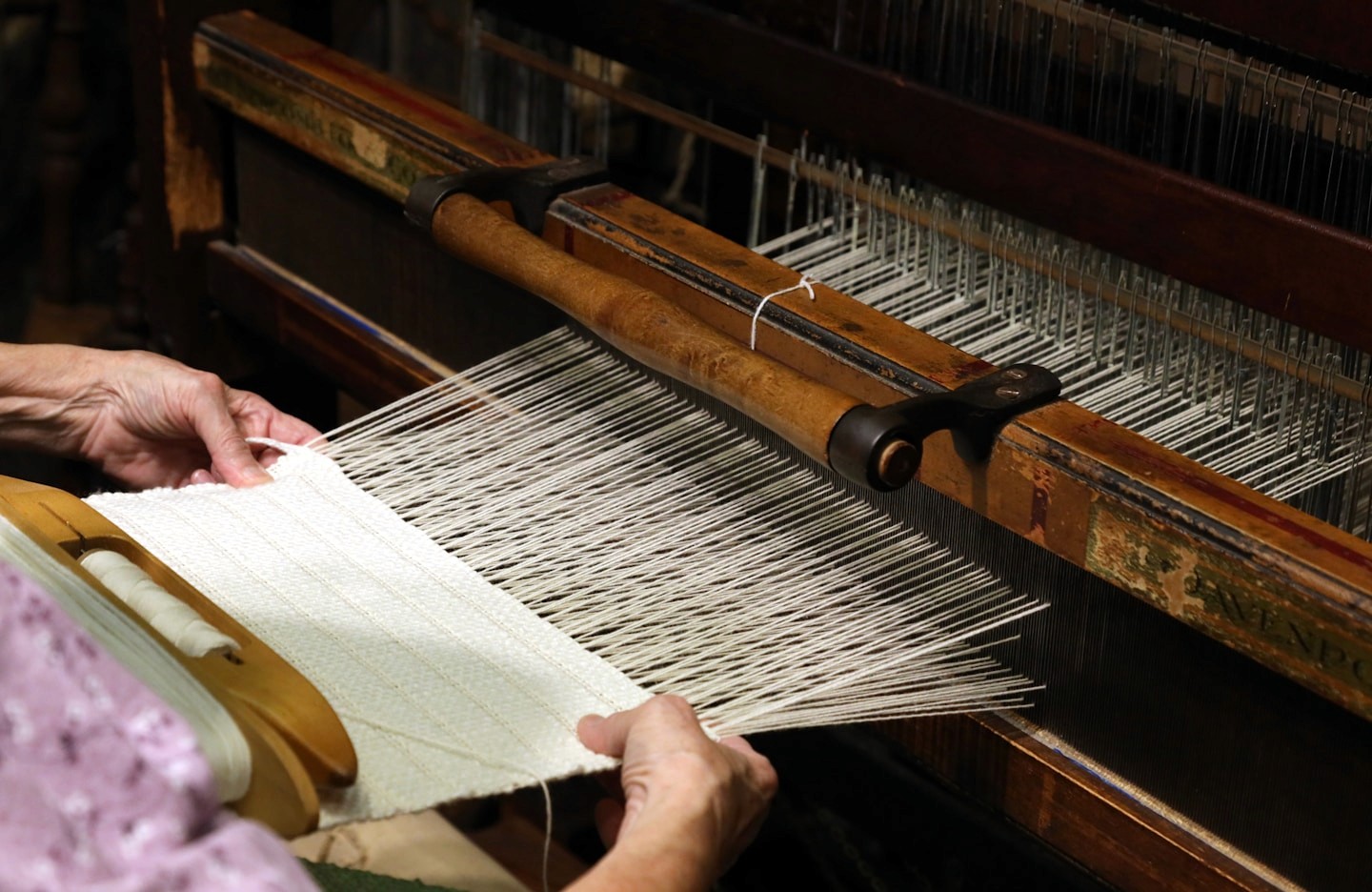
A selvedge is the edge a loom makes when it is allowed to finish its own sentence.
What a cut edge costs
Cut edges fray and need overlocking. A true selvedge does not — the weft turns and locks itself. One is a repair. The other is simply how the cloth came off the loom.

Why it is rarer now
It is slower, narrower, and more expensive. Width is where most mills find their margin, and a selvedge loom refuses to give you width.
A narrow loom yields less cloth per hour, and the arithmetic is unforgiving.
The edge cannot be rushed; the shuttle sets the pace, not the operator.
Fewer people can set the loom each year, which is the part that worries us.
The difference it makes
It is the difference between cloth that survives washing and cloth that merely tolerates it. The finish that follows is described in The Art of Beetling.
Róisín Fahey
Frequently Asked Questions
What is a selvedge?
The self-finished edge a loom produces when the weft turns and locks itself, rather than being cut and overlocked.
Why does it matter?
Cut edges fray and need overlocking. A true selvedge does not, which is why the cloth survives washing rather than merely tolerating it.
Why is it rarer now?
Because it is slower, narrower and more expensive to weave. Width is where most mills find their margin.