Craftsmanship
Inside the Beetling Mill

Written by Isabella Moore

The beetling engine at Upperlands has been falling on cloth since the eighteenth century. It is loud in a way that reorganises your thinking.
Forty hammers
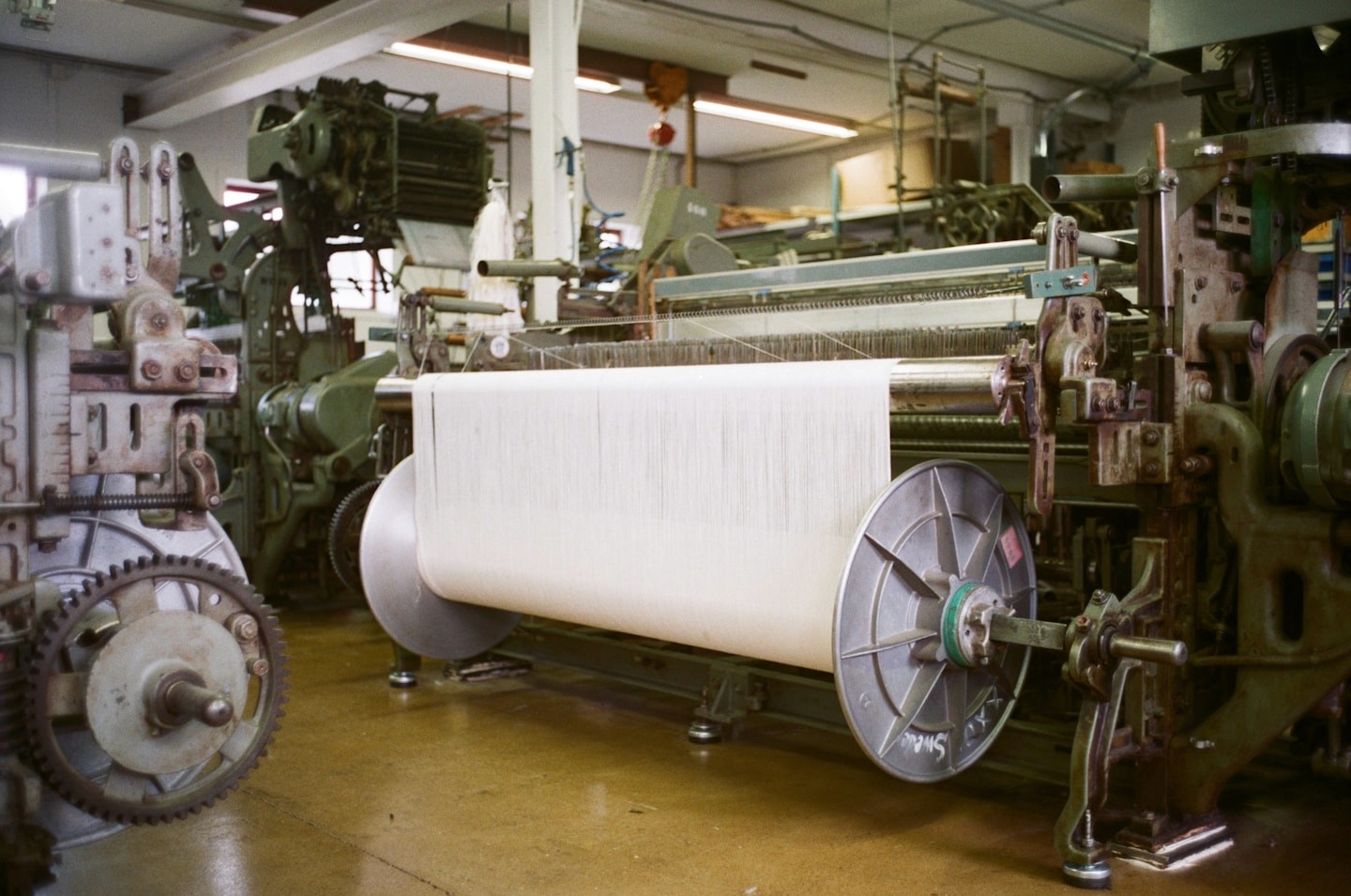
Forty hammers drop onto a rotating bolt of linen for hours, flattening the weave until the surface takes on a low, liquid sheen. No chemical finish reproduces it. Several have tried; all of them wash out.
One engine, one man
There is one working engine of its kind left in Ireland, and one man who knows how to set it. We went to watch him do it. Setting takes most of a morning and consists almost entirely of listening.
Too dry and the cloth bruises rather than flattens.
Too wet and the hammers drive the weave out of true.
Too long and the sheen goes hard, which cannot be undone.
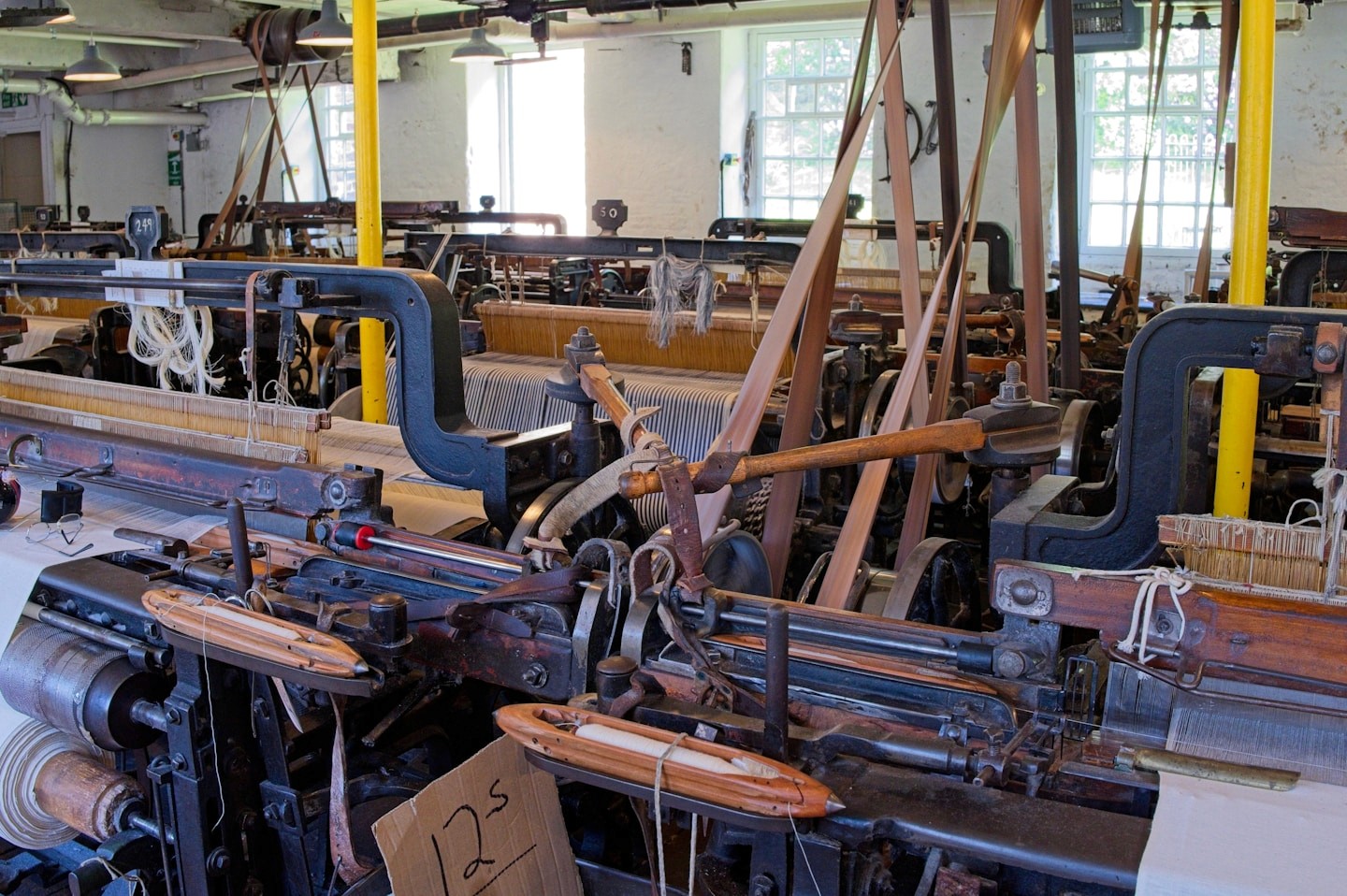
You do not watch the cloth. You listen to it. When the note changes, it is finished.
Why it survives
The finish is structural, not applied, which is the whole argument for keeping the engine running. You can read more about the process in The Art of Beetling.
Róisín Fahey
Frequently Asked Questions
What is beetling?
A finishing process in which weighted hammers fall repeatedly on damp linen, flattening the weave until the surface takes on a low sheen.
How old is the engine at Upperlands?
It has been falling on cloth since the eighteenth century, and is the last working engine of its kind in Ireland.
Can the finish be reproduced chemically?
No. Chemical finishes sit on the cloth. Beetling rearranges the cloth itself, which is why it survives washing.


